RFP Implementation Plan: Phases Without Guesswork
Evaluators scrutinize the implementation section to determine whether a bidder can execute on time, within budget, and without operational disruption. When a complex commercial or public sector tender requests an RFP implementation plan, submitting a generic software development lifecycle or a high-level Gantt chart leads directly to score deductions. Procurement committees require concrete project phases, explicit resource commitments, detailed risk mitigations, and verifiable evidence that your proposed execution model aligns with their operational environment.
An RFP implementation plan is a detailed project execution schedule and methodology submitted within a proposal. It outlines project phases, key deliverables, resource allocations, milestone dates, risk management frameworks, and governance structures required to transition a contract from award to fully operational delivery, proving to procurement evaluators that the bidder can successfully execute the contract scope.
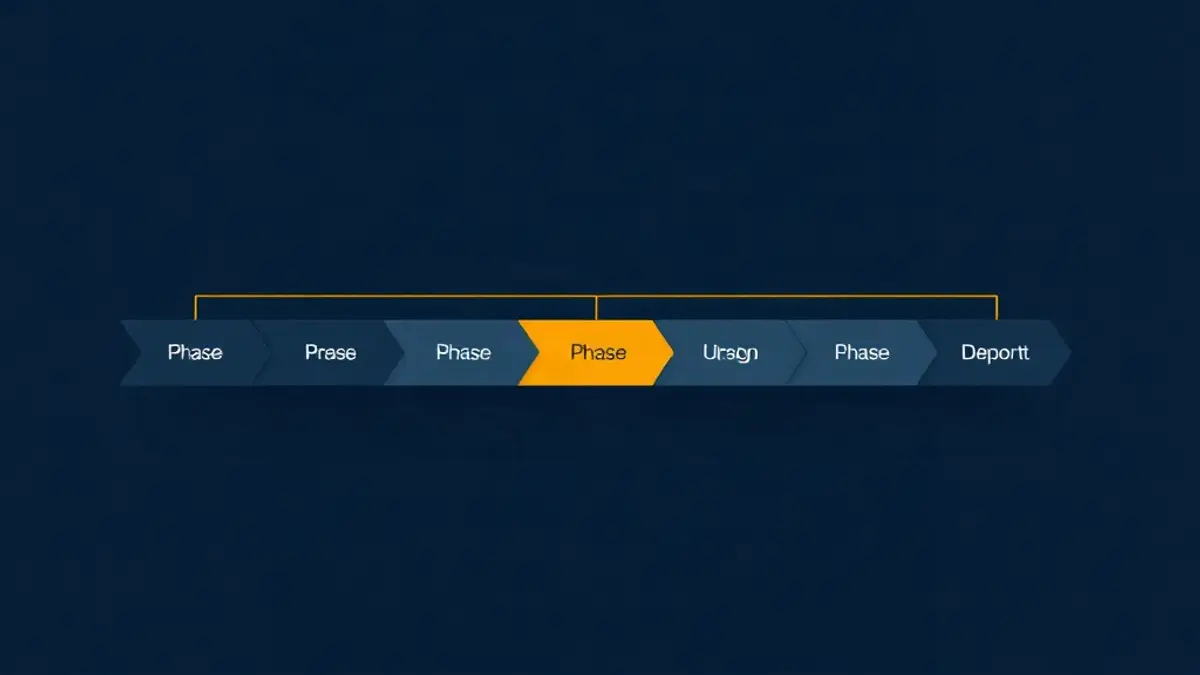
The Architecture of an Evaluator-Ready Implementation Plan
An evaluation committee reads dozens of proposal responses that make identical promises about quality, performance, and customer satisfaction. The proposal implementation plan is where abstract claims meet operational reality. Evaluators analyze this section to verify that your business understands the practical steps, technical dependencies, and governance requirements of the contract. A winning plan transitions seamlessly from contract award through mobilization, technical execution, testing, user adoption, and long-term operational support.
To score maximum points, your delivery model must balance detailed execution steps with clear executive oversight. Evaluators look for explicit milestones, concrete deliverables, named project roles, clear ownership of client-side dependencies, and comprehensive contingency protocols. By establishing a rigorous methodology structured into distinct, logical phases, your response demonstrates that your organization possesses the operational maturity required to deliver the contract without costly scope creep or project delays.
Phase 1: Mobilization, Governance, and Project Initiation
The initiation phase establishes the organizational foundation for contract delivery. Procurement teams need confidence that your firm can mobilize personnel quickly and establish clear channels of accountability from day one. Your narrative must define how project governance will operate, including steering committee cadence, project management office structures, reporting mechanisms, and escalation protocols for resolving commercial or operational blockers.
During initiation, the project leadership team completes contract onboarding, finalizes the project charter, and aligns working protocols with the buyer’s internal stakeholders. Key activities include holding formal kickoff workshops, establishing shared document repositories, configuring communication channels, and confirming resource allocations for key personnel. Explicitly detailing these early steps reassures the buyer that transition risks are minimized and that operational control is established immediately following contract execution.
Phase 2: Requirements Discovery and Baseline Design
The discovery phase translates broad tender requirements into detailed, actionable technical and operational specifications. Even when explicit technical specifications are provided in the tender documents, an initial discovery period is essential to validate assumptions, assess existing infrastructure, and map out integrations. Evaluators penalize proposal work plan submissions that assume perfect knowledge; demonstrating a formal discovery phase proves professional diligence.
During this phase, joint working groups perform detailed requirements gathering, conduct stakeholder interviews, assess data structures, and draft functional specification documents. The output of Phase 2 includes signed-off architecture designs, finalized interface control documents, updated risk registers, and confirmed baseline schedules. Establishing formal sign-off gates at the conclusion of discovery prevents unmanaged scope expansion later in the project lifecycle.
Phase 3: Technical Execution, Data Migration, and Customization
Phase 3 forms the core operational engine of your tender implementation plan. This is where your team configures software, builds custom integrations, constructs physical infrastructure, or deploys operational personnel according to the design specifications finalized during Phase 2. Evaluators expect this section to show clear work breakdown structures, technical sprint schedules, or clear construction milestones rather than broad claims about technical capability.
For technology and system integration tenders, data migration represents one of the highest operational risks. Your narrative must explain the precise data migration lifecycle: target schema mapping, legacy data extraction, data cleansing, transformation rules, dry-run trial migrations, and delta sync strategies during cutover. By detailing the technical methodology used to secure, validate, and verify migrated assets, your proposal addresses one of the top concerns of evaluation panels.
Phase 4: Quality Assurance, Verification, and User Acceptance
A robust technical approach requires rigorous testing protocols to verify that delivered capabilities meet every requirement outlined in the tender document. Evaluators seek a formal testing framework encompassing component testing, integration testing, performance and load testing, security vulnerability assessments, and formal User Acceptance Testing (UAT). Each testing stage must feature clear entrance and exit criteria, defect tracking workflows, and remediation timelines.
In federal, municipal, and regulated sector procurements, quality assurance protocols must strictly align with statutory guidelines. For instance, infrastructure and physical engineering tenders often adhere to specialized regulatory standards, such as FAR Part 36 on construction and architect-engineer contracts, which mandate specific inspection procedures, physical quality control management, and formal acceptance protocols. Documenting strict adherence to industry-standard testing regimes confirms that your execution strategy complies with both client requirements and statutory frameworks.
Phase 5: Operational Cutover, Change Management, and Go-Live
The cutover phase represents the transition point where the new solution or service shifts from a development or staging environment into live production. A high-scoring RFP project plan provides a detailed cutover window strategy, including hour-by-hour operational runbooks, rollback protocols, command center structures, and fallback procedures if unexpected critical issues arise during deployment.
Alongside technical cutover, successful implementation requires comprehensive change management and user enablement strategies. Your proposal must outline tailored training programs for administrative users, operational teams, and executive management. Specify training delivery methods, user documentation assets, standard operating procedure manuals, and competency assessment methods. Demonstrating a clear commitment to user adoption ensures that the buyer’s organization achieves operational readiness without business disruption.
Phase 6: Post-Deployment Support and Handover to Operations
The final phase of a complete proposal implementation plan covers the post-go-live stabilization period, often referred to as hypercare, alongside the formal transition to long-term operational support. Procurement evaluators require clarity on how your team will handle early-life support issues, track incidents, manage SLA compliance, and transition day-to-day management from project implementation resources to operational support teams.
Hypercare typically involves embedding dedicated technical leads alongside client staff for a defined post-launch period, ensuring immediate response to operational queries and rapid defect resolution. Handover protocols require formal acceptance documentation, operational runbook transfers, knowledge transfer sessions, and a post-implementation review to evaluate project outcomes against baseline metrics. Defining these operational guardrails gives evaluators full confidence in your firm’s long-term commitment.
Constructing a Compliant Proposal Work Plan Schedule
A comprehensive proposal work plan must present project timelines clearly, demonstrating logical task sequencing, explicit work breakdown structures, critical path items, and client-side dependencies. Evaluators assess work plans to judge whether your proposed timeline is realistic or overly optimistic. Structuring your schedule into transparent phases with associated deliverables helps procurement officers score your project management approach accurately.
| Project Phase | Primary Activities & Focus | Key Phase Deliverables | Gate Criteria for Phase Exit |
|---|---|---|---|
| 1. Mobilization & Governance | Charter creation, committee setup, resource allocation, kickoff. | Project Charter, Governance Framework, Kickoff Deck. | Formal approval of governance charter by steering committee. |
| 2. Discovery & Design | Requirements workshops, architecture mapping, gap analysis. | Functional Design Document, Architecture Specification. | Signed client sign-off on technical design specifications. |
| 3. Execution & Build | System configuration, integration build, data transformation mapping. | Configured Environment, Integration Middleware, Migration Scripts. | Internal code freeze and completion of integration testing. |
| 4. Testing & Quality Assurance | System testing, vulnerability scans, user acceptance testing (UAT). | Test Execution Logs, Security Audit Report, UAT Sign-off. | Zero critical or high-priority open defects. |
| 5. Cutover & Go-Live | Production deployment, cutover runbook execution, end-user training. | Production Deployment, Conducted Training Sessions, Go-Live Protocol. | Successful production cutover verification and executive approval. |
| 6. Hypercare & Handover | Onsite hypercare support, SLA tracking, operational handover. | Handover Certificate, Support Runbook, Project Closeout Report. | Formal acceptance of operational handover by client operations lead. |
When inserting your schedule into a proposal, avoid providing isolated dates without context. Clearly annotate key project milestones and link them directly to payment schedules or formal review gates. Explicitly identifying client dependencies—such as access to legacy databases, timely review of design documents, or provision of sandbox environments—protects your operational baseline and demonstrates deep practical delivery experience.
Defining Resource Allocation and Key Personnel
Evaluators pay close attention to the resource loading across each project phase. A common flaw in tender responses is listing senior personnel in the executive overview but failing to reflect their billable hours or management oversight in the detailed implementation plan template proposal. Your narrative must establish a transparent resource management model that accounts for project management, technical architecture, domain expertise, quality assurance, and change management.
To prevent confusion regarding operational roles and responsibilities, incorporate a clear RACI matrix into your implementation method statement tender response. A RACI structure categorizes every major project activity across responsible, accountable, consulted, and informed roles.
| Implementation Activity | Project Director | Lead Solution Architect | Implementation Engineer | Client Project Sponsor | Client Technical Team |
|---|---|---|---|---|---|
| Governance & Kickoff | Accountable | Consulted | Informed | Responsible | Consulted |
| Baseline Architecture Design | Informed | Accountable | Responsible | Consulted | Consulted |
| Core Integration Build | Informed | Accountable | Responsible | Informed | Consulted |
| User Acceptance Testing (UAT) | Informed | Consulted | Support | Accountable | Responsible |
| Production Cutover Execution | Accountable | Responsible | Responsible | Informed | Support |
| Operational Handover Sign-off | Accountable | Consulted | Support | Responsible | Consulted |
Note: The roles and governance split detailed above represent a standard enterprise delivery structure for complex integration projects.
By mapping roles explicitly, you assure the procurement team that your key personnel are correctly deployed across critical activities, while also making client responsibilities transparent from the outset of the contract.
Integrating Risk Management into Your Delivery Methodology
Every implementation carries risk, whether related to data quality, resource availability, tight cutover windows, or third-party API dependencies. Evaluators score risk management frameworks based on how effectively they identify potential points of failure and integrate pre-planned mitigation measures directly into the work plan. Rather than isolating risk management in a separate section, your implementation narrative should actively reference controls embedded within your delivery phases.
When describing project execution, demonstrate how your methodology addresses high-severity risks. For detailed strategies on structuring risk tables, mitigation plans, and probability matrices expected by procurement panels, refer to our detailed guide to RFP risk registers. Highlighting risk awareness directly inside your project schedule proves to evaluators that your proposed delivery model is resilient and tested.
Furthermore, your high-level executive narrative should summarize these risk controls cleanly. When structuring an RFP executive summary, summarizing key implementation milestones alongside core risk mitigations gives decision-makers immediate confidence in your execution capability before they dive into technical details.
Aligning the RFP Technical Approach with Evaluation Scoring Criteria
An effective implementation section does not exist in isolation; it must align perfectly with your overall proposal methodology template and technical narrative. Evaluators assign points based on how directly your written approach answers the explicit evaluation criteria set out in the tender instructions. If the tender stresses continuous delivery, your implementation plan must emphasize iterative deployment cycles; if it stresses compliance and security, your plan must highlight regulatory sign-off gates.
To ensure your technical methodology directly matches evaluator scorecards, review our comprehensive guide to technical proposal structure. This guide provides actionable frameworks for organizing technical approach narratives, matching requirements to proof points, and structuring complex engineering sections cleanly.
When refining your response narrative, ensure your RFP technical approach cross-references specific implementation phases. For instance, if your technical proposal promises enterprise service bus integration, your implementation schedule must show dedicated sprints for interface schema validation, endpoint configuration, and load testing. Aligning technical claims with schedule realities creates a unified response that scores highly across all evaluation categories.
Grounding Implementation Claims in Historical Evidence
The primary reason evaluation panels deduct marks from implementation sections is unverified claims. Statements such as “our experienced team ensures rapid deployment” or “we use industry-leading tools to manage projects” are discarded as marketing fluff unless backed by concrete operational proof. Procurement teams score proposals on evidence before eloquence.
To build an evidence-grounded response:
- Reference specific corporate case studies where your team deployed the identical project scope on time and within budget.
- Attach CVs and professional certifications (PMP, PRINCE2, ITIL, AWS Certified Solutions Architect) for every named key staff member listed in your RACI matrix.
- Provide historical baseline data, such as average migration completion times or verified uptime metrics from past cutover windows.
- Include sample artifacts from previous deployments, such as sanitized test plans, standard communication templates, or quality assurance checklists.
Writing an evidence-backed implementation response requires clear visibility into your organization’s compliance documentation and historical tender submissions. Using TenderOS allows proposal teams to extract mandatory submission criteria automatically, match existing organizational evidence to proposal questions, and identify missing proof points before submission. Running your tender document through a free tender analyzer helps count explicit implementation requirements, key dates, mandatory certifications, and commercial clauses instantly, ensuring no operational detail is missed during narrative drafting.
Construction and engineering tenders push this further still, tying the programme to method statements, resources and HSE plans — the guide to tender software for construction and engineering covers that variant.
Frequently asked questions
What is the primary purpose of an RFP implementation plan?
An RFP implementation plan demonstrates to procurement evaluators how your business will deliver the contracted scope of work on time, within budget, and according to specifications. It details project phases, work schedules, resource allocations, governance models, and risk mitigations. A thorough plan proves operational maturity and reassures the buyer that transition risks are fully managed.
How detailed should a tender implementation plan schedule be?
A tender implementation plan schedule should provide enough detail to demonstrate operational control without overwhelming evaluators with micro-tasks. Structure the schedule into logical phases with distinct work packages, named milestones, clear client dependencies, and explicit completion dates. Avoid generic high-level timelines by linking specific deliverables directly to project phases.
How do you demonstrate risk mitigation within a proposal work plan?
Demonstrate risk mitigation by embedding concrete controls directly into project milestones rather than treating risk as a separate narrative. Include specific review gates, trial dry runs, contingency windows, and user acceptance sign-offs within your project schedule. Explicitly referencing technical and operational mitigations within the work plan proves proactive project oversight.
What is the difference between an RFP technical approach and an implementation plan?
An RFP technical approach describes what tools, architectures, methodologies, and technical solutions you will use to solve the client’s problem. The implementation plan describes how, when, and by whom that solution will be configured, tested, deployed, and operationalized. Both sections must cross-reference each other to present a coherent proposal narrative.
How should team availability be represented in a proposal implementation plan?
Represent team availability using a clear resource allocation model or RACI matrix that specifies named project roles, their associated responsibilities, and their level of commitment across each phase. Avoid listing senior executives without showing their specific billable hours or governance oversight. Showing realistic resource distribution confirms that your project timeline is operationally achievable.
What happens if client dependencies delay the implementation timeline?
Your implementation plan should explicitly highlight client dependencies—such as data access, infrastructure provisioning, and timely document sign-offs—as mandatory prerequisites for subsequent project phases. Include clear governance escalation paths and schedule baseline control mechanisms to adjust project timelines formally if client-side delays occur during contract execution.
Establishing Clear Client Obligations and Joint Responsibility Matrices
One of the most frequent reasons implementation plans fail during evaluation is a lack of clarity regarding what is expected from the buyer’s internal team. Evaluators look closely for implicit assumptions where a bidder expects the client to handle complex tasks—such as data cleansing, infrastructure access, or subject matter expert availability—without explicitly defining those commitments. When these responsibilities are left ambiguous, scoring panels often flag the proposal for delivery risk, potential friction, or hidden client resourcing costs.
To eliminate this ambiguity, a robust implementation proposal must include a formal joint responsibility matrix alongside the core methodology. This framework maps every major deliverable to specific client roles, detailing required inputs, sign-off authorities, and effort expectations. Rather than offering vague assertions about client participation, outline precise dependencies for each operational phase. Specify who on the client side must review design documents, participate in user acceptance testing, or authorize production release gates.
A practical approach to structuring this section involves framing client obligations as critical path dependencies rather than passive assumptions. Clearly distinguish between supplier-led tasks, client-led tasks, and shared governance activities. Detail the protocol for when client-side resource bottlenecks occur, explaining how variance will be managed collaboratively to protect delivery quality without introducing friction into the working relationship.
By transparently establishing these client requirements, bidders demonstrate operational maturity and respect for the buyer’s internal resource constraints. Evaluators gain confidence knowing that the proposed schedule rests on clear, actionable joint commitments rather than unstated expectations. Note that this information serves as general guidance for proposal structuring; specific contractual terms, liability boundaries, and regulatory compliance obligations vary by buyer and jurisdiction and must be confirmed during the procurement process.
Streamline RFP Implementation Planning with TenderOS
Drafting a compliant, evidence-backed RFP implementation plan requires precise requirement tracking, explicit resource mapping, and rigorous document verification. Missing a single mandatory implementation deliverable or milestone date requested in a 200-page tender can lead to non-compliance or heavy scoring penalties.
Before writing your next proposal work plan, run your tender documents through the browser-based tender analysis tool. The free analyzer processes DOCX, TXT, and text-based PDF files directly in your web browser—without uploading your document to external servers. It automatically extracts key milestone dates, counts requirement statements, isolates mandatory deliverable criteria, lists requested certificates, and flags high-attention commercial terms instantly.
For proposal teams looking to maintain a centralized knowledge repository and automate compliance workflows, TenderOS offers paid tier workspaces designed for end-to-end bid management:
- Starter Plan: $299 per month for small bid teams building structured compliance matrices and managing core company assets.
- Business Plan: $799 per month for growing presales teams requiring grounded AI narrative drafting, evidence matching, and addendum change detection.
- Pro Plan: $1,499 per month for multi-team organizations needing advanced workflow approvals, comprehensive risk registers, and automated export controls.
- Enterprise Plan: Tailored annual contracts for enterprise procurement operations requiring custom integrations, dedicated security controls, and bespoke onboarding support.
To explore all workspace features, compare subscription capabilities, and streamline your bid management workflow, view our transparent pricing options at [/pricing/]. Start analyzing your live RFPs today to build precise, evidence-grounded implementation plans that win complex tenders.