Proposal content
RFP Executive Summary: Structure and Example
Write an effective RFP executive summary that outlines the buyer's problem, proposed solution, and supporting evidence without unsupported claims.
An evaluator reads a proposal looking for a reason to award points, and more often for a reason they cannot. The guides here cover the sections where that judgement is formed — the executive summary an evaluation panel reads first, the technical response that has to demonstrate rather than assert capability, and the templates and governance that keep a document consistent when six people write it in four days.
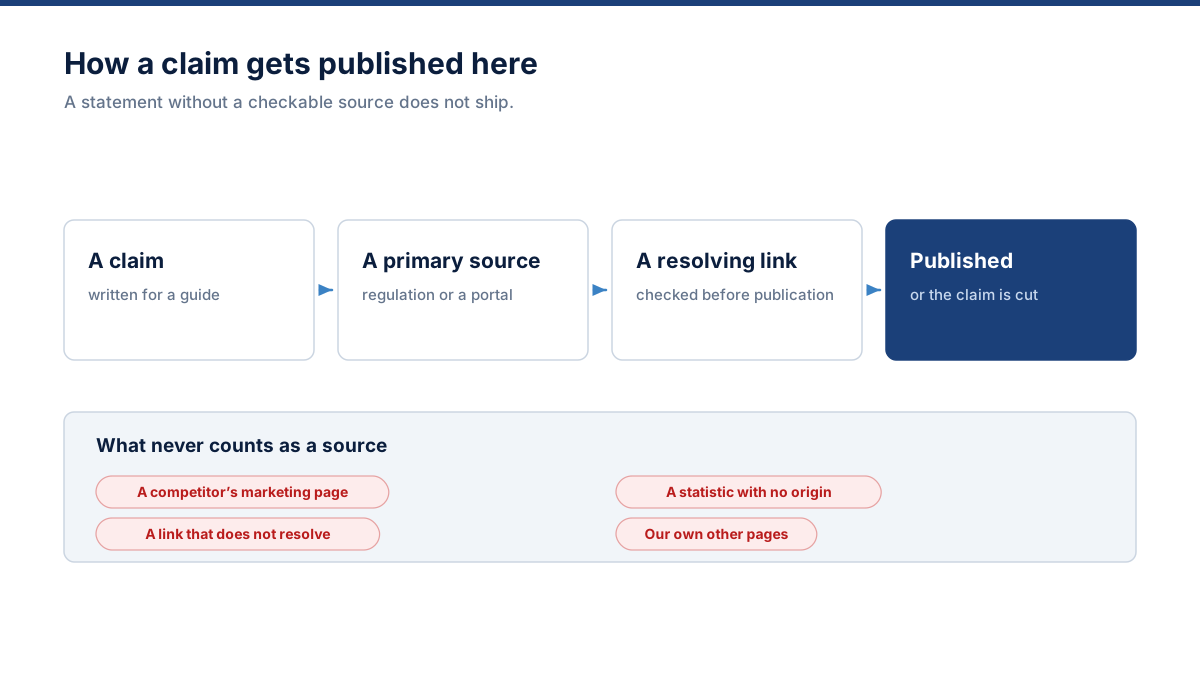
The recurring principle across these guides is evidence before eloquence. A sentence that states a capability is worth less than a sentence that states it and points to the document proving it, and a paragraph of confident prose with nothing behind it is a liability under any evaluation model that asks for substantiation. Writing to that standard is a constraint, and the constraint is what makes the writing credible.
The second recurring theme is disclosure. Naming an unresolved point in a submission feels like conceding weakness, and teams routinely bury it instead. An evaluator who finds an undisclosed gap discounts the reliability of everything else in the document, which makes concealment the more expensive choice.
On the writing itself, the US federal plain language guidelines remain the most practical public reference for prose an evaluator can read quickly.
Write an effective RFP executive summary that outlines the buyer's problem, proposed solution, and supporting evidence without unsupported claims.
Structure your technical proposal with core sections: methodology, understanding, governance, quality assurance, implementation, and risk management.
Draft a practical RFP implementation plan covering discovery, build, testing, training, go-live, and ongoing support without unverified durations.
Build an RFP risk register evaluators respect: real delivery risks, qualitative likelihood and impact, named owners and mitigations you actually use.
Identify tender ambiguities early and construct concise RFP clarification questions that secure actionable answers before the official deadline cut-off.
Locate the stated RFP evaluation criteria, weights, minimum scores and pass/fail gates, then map every response section to the criterion marking it.