Industry & sector
Government RFP Software and Public Tender Response
Dedicated government RFP software manages public sector compliance, strict mandatory formats, required forms, fixed deadlines, and eligibility rules.
The method of responding to a tender is broadly constant; what changes by sector is what the buyer demands as proof and what a failure costs. These guides cover the conventions that general advice tends to skip — the ones that make a response credible to an evaluator who works in that market every day.
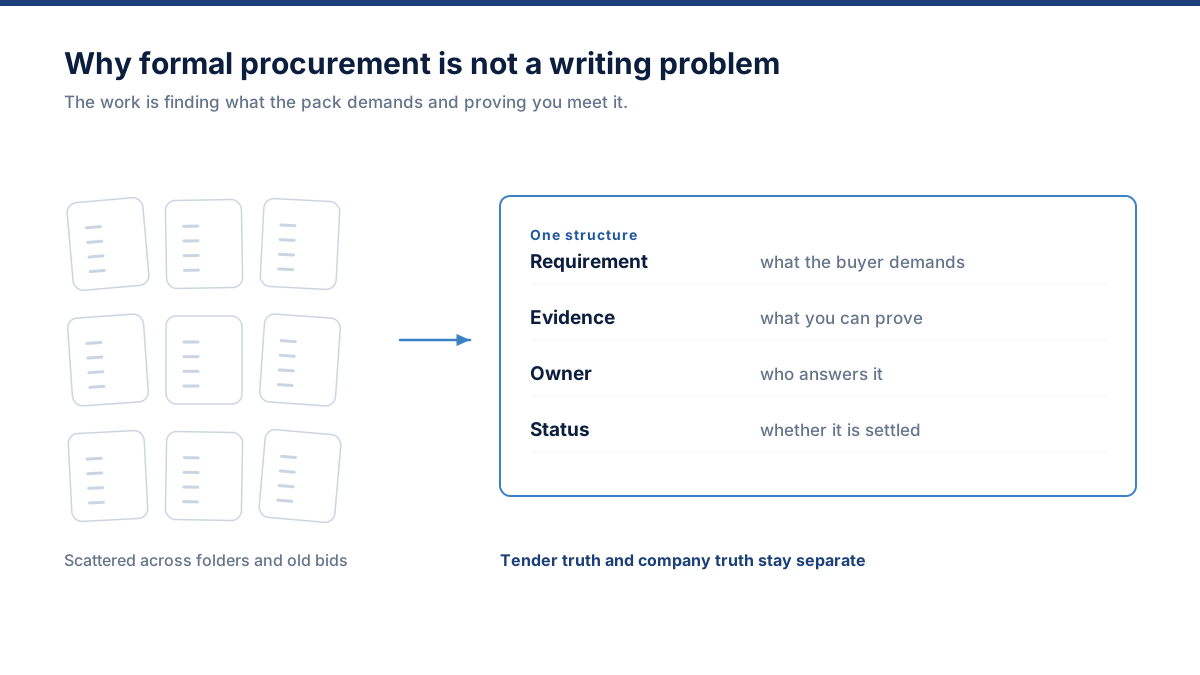
Construction and engineering tenders carry work package structures, performance bonds, retention terms, safety and environmental accreditations, and multi-entity bidding through joint ventures and consortia. Technology bidders face security and data protection requirements more often than any other requirement class, and are assessed on evidence that has a validity date attached. Public sector bidders operate under a registration and portal layer that private procurement does not impose at all.
Reading the sector conventions before assessing fit prevents work being invested against the wrong gate, which is the most common way sector-inexperienced bidders lose tenders they could have won.
On internationally financed projects, the standard procurement documents published by the World Bank set out sector conventions explicitly, including how joint venture bidders are assessed.
Dedicated government RFP software manages public sector compliance, strict mandatory formats, required forms, fixed deadlines, and eligibility rules.
Specialized RFP software for IT companies organizes recurring topics like architecture, security, SLAs, data residency, support models, and team CVs.
Streamline construction tenders by deploying tender software for construction to track method statements, HSE plans, project schedules, and bonds.
Specialized RFP software for consulting firms organizes case studies, staff CVs, and methodology documents without creating generic proposal text.