How-to guides
How to Respond to an RFP: The Full Process
Master how to respond to an RFP using a step-by-step workflow: qualify, extract requirements, assign owners, collect evidence, draft, and validate.
These guides follow a single response from the moment the pack arrives to the moment it is uploaded. They are written for the person who has to actually do it — decide whether to bid, take a long document apart, work out what is mandatory, assign owners, gather proof, draft, review, and get the submission in before a portal clock that does not negotiate.
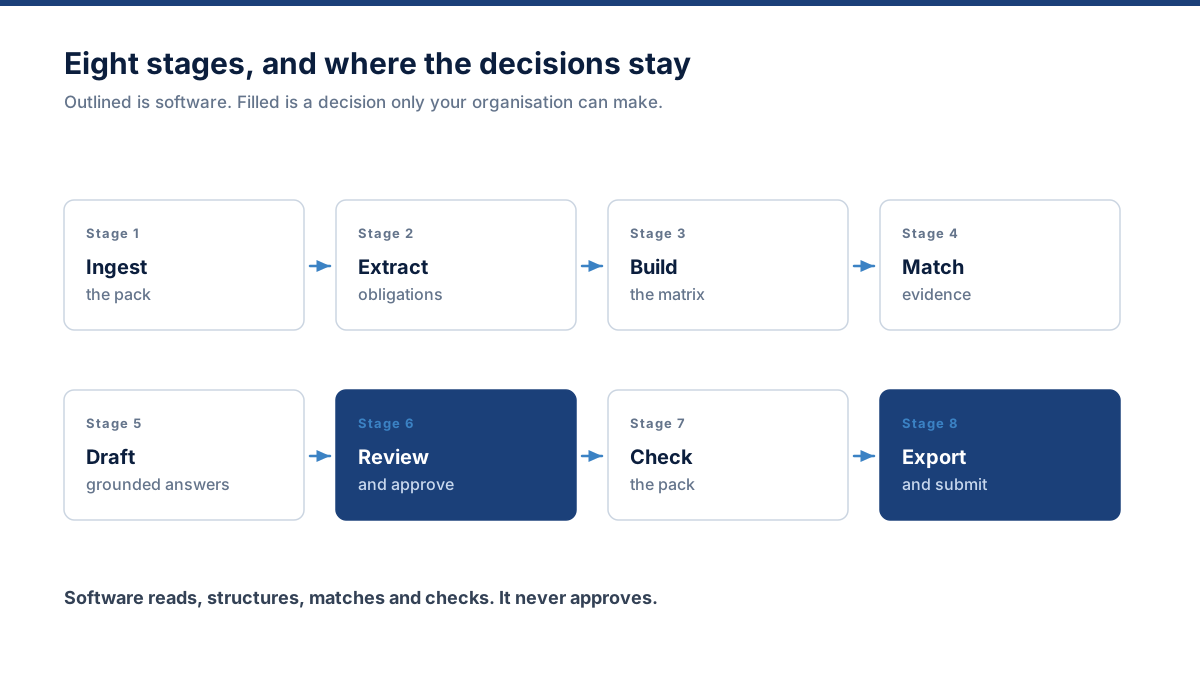
Most guidance on this subject describes the writing and skips the mechanics, which is the reverse of where responses are lost. A submission is rejected for a missing annex, an answer over a character limit, an unsigned declaration or an addendum that reworded a question already answered, and none of those are writing failures. They are tracking failures, and they are invisible afterwards because a submission excluded at the compliance check is never scored.
The sequence matters more than any individual step. Work done out of order — drafting before requirements are extracted, gathering evidence before knowing what is demanded — is work that usually gets redone.
Buyers in the United Kingdom advertise higher-value opportunities, and the stage structure attached to them, on Find a Tender — worth reading before planning a response schedule.
Master how to respond to an RFP using a step-by-step workflow: qualify, extract requirements, assign owners, collect evidence, draft, and validate.
Learn how to write an RFP response using answer-first structure, precise compliance terms, proper evidence placement, and strict word limit controls.
Apply a structured RFP response template that pairs requirement descriptions with compliance statements, clear approach text, and supporting evidence.
Understand how to respond to a tender by prioritizing compliance checks, gathering essential documents early, and matching requested file formats.
Clarify what is an RFP, why procurement teams issue them, what standard sections contain, and how suppliers manage the process from release to award.
Compare RFP vs RFQ vs RFI and ITT requests to understand how response strategies shift between information gathering, pricing, and solution bids.