Company knowledge & AI
Evidence Matching: Prove Each RFP Requirement
Effective RFP evidence matching connects requirements to proof documents, highlighting gaps in certificates or case studies early in the process.
Every claim in a tender response is either supported by a document the organization actually holds, or it is not. The guides in this section deal with the company knowledge layer that decides which — the structured store of certifications, policies, case studies, CVs and approved answers that a drafting system reads from, and the matching that connects each requirement to the evidence that satisfies it.
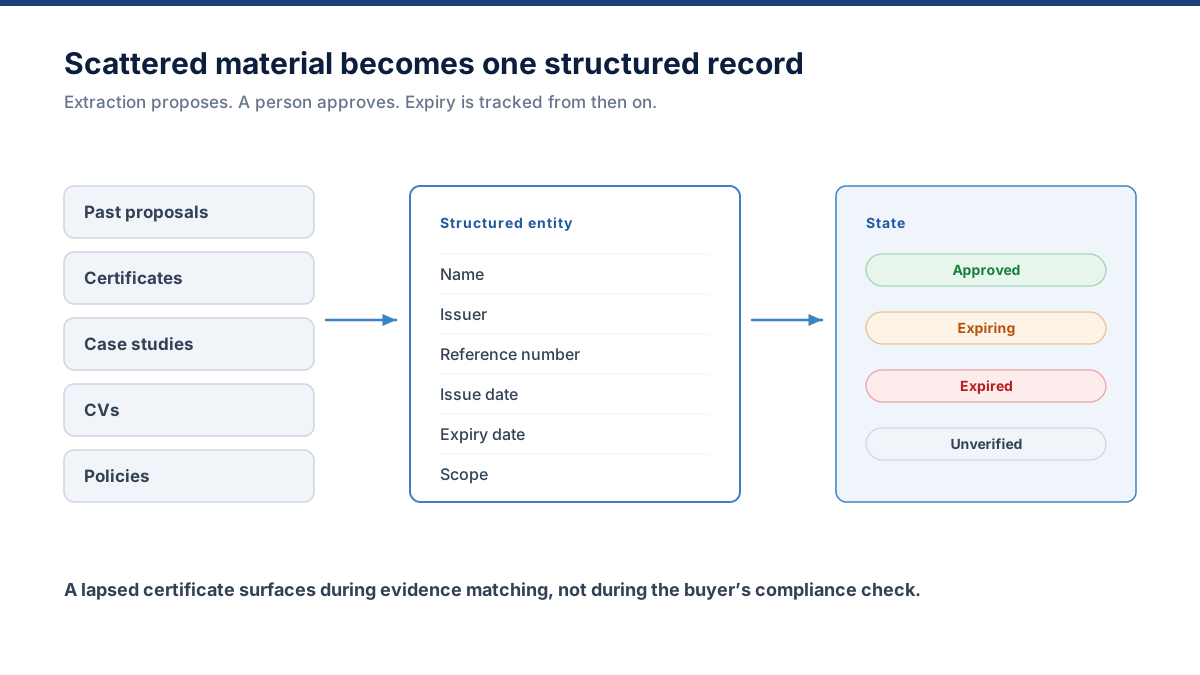
This is where AI in bidding either becomes useful or becomes dangerous. A language model asked to answer a requirement with no supporting evidence will produce fluent, plausible, unsupported prose, and a reviewer under time pressure will not always catch it. A system that retrieves from an evidence library first, and records an explicit gap when retrieval returns nothing, produces less text and far more submittable material.
The operational failure in this layer is rarely the absence of evidence. It is evidence that exists but cannot be found, or that was valid when it was filed and has since expired. Several guides below cover the tracking that prevents a bid depending on a certificate that lapsed three weeks before the submission date.
For the governance side of deploying these systems, the US National Institute of Standards and Technology publishes an AI risk management framework that is a reasonable starting point for internal policy.
Effective RFP evidence matching connects requirements to proof documents, highlighting gaps in certificates or case studies early in the process.
How to build an RFP knowledge base your team actually uses: what to store, how to keep it approved and current, and why ownership matters more than volume.
Build an RFP response library that is safe to reuse: what qualifies, how approval and expiry work, and why a won bid does not validate its wording.
Enforce grounded AI RFP responses by tracing every claim to underlying source documents, ensuring missing proof triggers explicit system warnings.
Establish RFP content governance by assigning content ownership, setting expiration dates, and managing re-approvals for expiring certificates.
Implement certificate expiry tracking RFP workflows for licenses, insurance, and bonds so expired documents are flagged well before tender submission.
RFP case study matching pairs each experience criterion with the closest past project, checks the reference is still current and flags gaps early.