Compliance & requirements
RFP Compliance Matrix: Build One That Holds Up
Build a complete RFP compliance matrix directly from procurement documents to keep every requirement row traceable to its source clause and section.
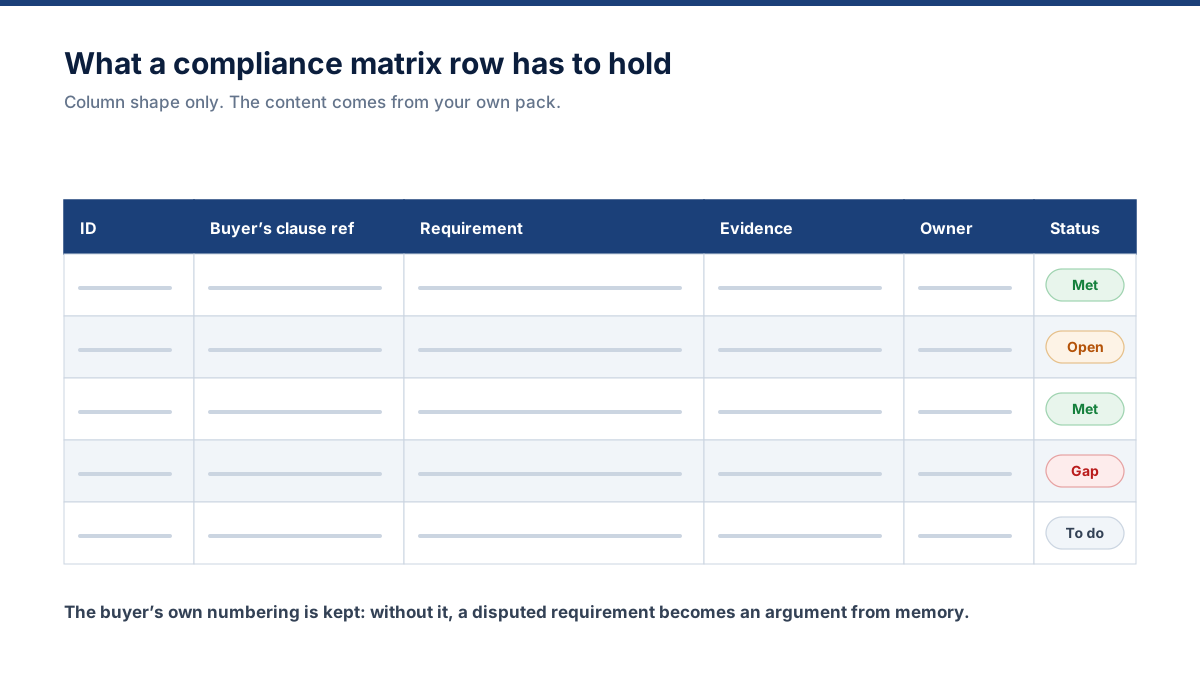
A compliance matrix is the register of everything a buyer demands, and it is the single artefact that determines whether a response is complete. The guides here cover how that register is built — pulling obligation statements out of a pack, separating mandatory conditions from preferences, capturing requested documents and dates, and keeping the register accurate when the buyer issues an addendum mid-bid.
The distinction that governs everything else is between a requirement that scores points and one that decides admissibility. A missed preference costs a few marks. A missed pass/fail condition ends the submission regardless of how strong the rest is, which is why these guides treat mandatory-clause detection as a separate discipline from general requirement capture.
The hardest case is the requirement that is never labelled as one. Obligations sit in appendices, in draft contract terms, in form instructions and in evaluation criteria, and a matrix built only from the sections marked "requirements" will be incomplete in ways nobody notices until an evaluator does.
Where the buyer is a US federal agency, the conduct of the solicitation is governed by the Federal Acquisition Regulation, including the rules that decide whether a late or non-conforming submission may be considered at all.
Build a complete RFP compliance matrix directly from procurement documents to keep every requirement row traceable to its source clause and section.
An RFP requirements matrix records what the buyer asked for; a compliance matrix records what you can prove. Confusing the two loses mandatory items.
A repeatable RFP requirement extraction method covering obligation language, tables, annexes, forms and clauses buried in the terms and conditions.
Identify RFP mandatory requirements reliably using keyword rules and AI classification to prevent missing pass or fail obligations before submission.
Use an RFP required documents checklist to identify missing certificates, licenses, financials, forms, and references hidden across tender files.
An RFP deadline extractor locates site visit dates, clarification cut-offs, submission deadlines, and timezones while flagging ambiguous date formats.